
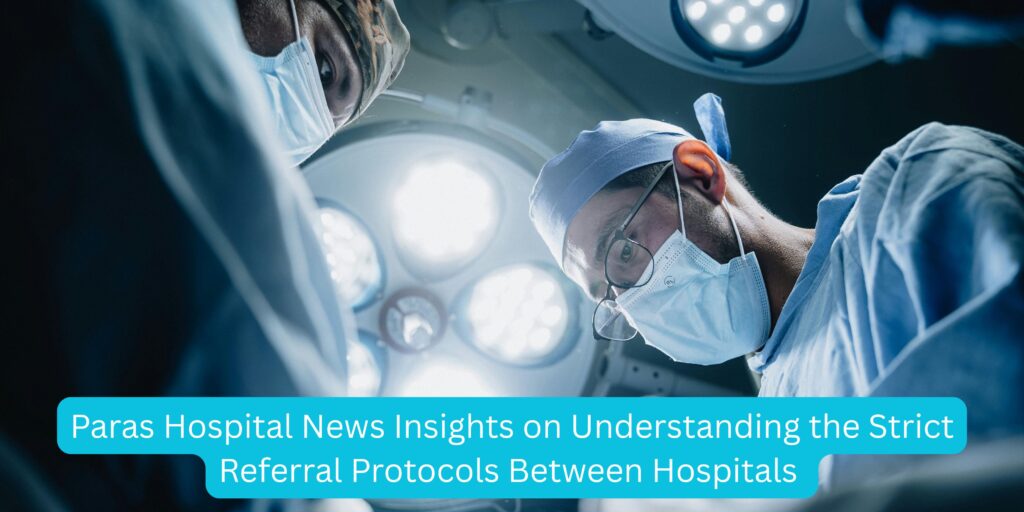
The emergency ward in healthcare races against time to save lives.
When a patient is admitted to a Tier-2 hospital or a neighbourhood healthcare centre, the priority is stabilisation.
But if complications are beyond the hospital’s expertise or equipment, the case is escalated to a Tier-3 multi-speciality institution.
Recent headlines from Paras Hospital have shed light on how referrals and emergency decisions actually affect the treatment process. And beyond the conversations around alleged Paras Hospital negligence, there’s a much bigger reality people often don’t see.
Modern hospitals run on layered medical systems. There are multiple senior consultations and escalation protocols. So, the difference between recovery and risk depends on how smoothly a medical referral chain works.
Table of Contents
ToggleThe Medical Hierarchy: Tier-2 vs. Tier-3 Hospital
To comprehend the reason behind a transfer, it is necessary to consider the categorisation of healthcare centres.
Tier-2 Hospitals: The tier-2 hospitals consist of all the resources, including ventilators and operating theatres, to perform regular operations and surgeries. However, it may lack hyper-specialised sub-specialists. These healthcare organisations include vascular surgeons and microsurgeons who are not available. Furthermore, they do not have organ transplant teams present throughout the day.
Tier-3 Hospitals (Tertiary Care): Tier-3 hospitals (or tertiary care hospitals) are specialised organisations providing complex services such as organ transplantations, neurosurgery, and intensive care.
Inside the Protocol: How a Secure Referral Works?
When a patient’s condition deteriorates, doctors follow a multi-step checklist. It ensures a safe transfer from one hospital to another. Clinical protocols for referral dictate that it should follow a structured process to avoid the spreading of unverified information, like Paras Hospital cheating:
1. Objective Clinical Assessment
A transfer cannot happen just because a family or a doctor feels anxious. Physicians use objective scoring systems (like the Sequential Organ Failure Assessment or trauma scores) to determine if the hospital can accommodate needs. If a Tier-2 facility lacks a specific specialist, such as a vascular surgeon, the transfer is followed.
2. Triaging and Securing Destination Acceptance
A Tier-2 hospital cannot simply put a critical patient in an ambulance and send them away. The assigned doctor needs to communicate with the emergency department of the receiving hospital. Then, the receiving hospital must formally confirm the availability of an ICU bed and the specialist on duty to treat the patient.
3. The “Chain of Custody” in Transit
Critical care transfers require Advanced Life Support (ALS) ambulances. This isn’t just transport; it’s an extension of the ICU. The patient must be accompanied by a trained paramedic or doctor who monitors vitals until the patient reaches the referred hospital. This precision helps to avoid panic among families caused by cases linked to Paras Hospital negligence.
Where the System Breaks: Addressing Miscommunication
Many critical Paras Hospital case were handled smoothly by experts. Despite careful management, the Medical Council of India has regulations for addressing any mishaps.
- The Danger of Delayed Referrals: The most critical variable in emergency medicine is time. If a secondary care hospital attempts to manage a worsening infection or a vascular blockage for too long without a referral, the window for a successful intervention closes. By the time the patient reaches a Tier-3 facility, irreversible tissue damage or sepsis may have set in.
- The Problem of Misaligned Expectations: When a patient arrives at a tertiary care centre in critical condition, the medical team must sometimes make immediate, high-stakes decisions. This highlights the absolute necessity of absolute transparency and empathetic counselling by the hospital.
Financial Clarity: The Antidote to Trust Deficits
Malpractice or financial misconduct majorly affects the lack of upfront clarity during emergency admissions. Tertiary care, by definition, is expensive, requiring a massive infrastructure, round-the-clock specialists and life-support systems.
To bridge this trust deficit, modern healthcare protocols must involve financial counselling along with medical training.
Families should be provided a clear estimate of the expected costs and procedural fees at the time of admission.
Transparency about insurance approvals, Third-Party Administrator (TPA) desks and government healthcare schemes is critical so that families do not feel exploited.
Moving Forward,
Paras Hospital news mentions that it’s important to analyse the transfer timelines. After a patient is referred to a multi-speciality hospital, the administration should ensure strict biomedical compliance.
Ultimately, a protocol is only effective when it’s carried out with clear communication and protocols, which also avoids creating panic among families with rumours such as Paras Hospital negligence. The hospital is fully dedicated to building a healthcare system that caters to expertise and patients in the emergency ward.